Applying for Education Loan? Here is what you need to know

Team Rhino | Updated: 10 Apr, 2020 | Category: Education Loan
Education is quite expensive in our country. If you want to get a quality education without breaking a bank or burdening your guardians, then an education loan is a way to go. To avail a student loan, there are specific prerequisites that you need to satisfy in the first place.
Let’s have a look at the eligibility criteria for getting a student loan in India.
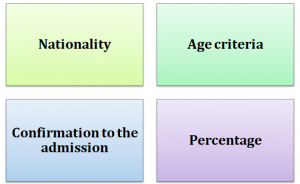
Nationality
An applicant ought to be an Indian National.
Age criteria
Age bandwidth for the student loan ranges between 18-35 years.
Confirmation to the admission
The applicant who seeks education loan should have confirmation regarding admission to a college/university by the UGC/Government/AICTE/Appropriate authority.
Percentage
An applicant must have qualified exams with an aggregate percentage of 60. The application process might not be the same for all banks. Here are fundamental steps that will help you secure a student loan.
Steps by Step Guide to Avail Education Loan
Step 1: The loan application form
The first steps to secure a loan always start with a registration form and student loan is no exception here. Every applicant has to go through this paperwork, which may demand the following requirements.
- Two Passport size photographs
- Graduation, school certificate or mark sheets.
- KYC documents such as PAN card and Voter ID.
- ID, address, and age proof.
- Signature and Parents income proof
- Collateral such as FDs and documents for Immovable property.
If an Applicant/candidate seeks an education loan to study abroad, then the following documents will be needed to cater to that requirement.
- Two passport size photographs
- KYC Documents such as PAN card and Voter ID
- ID, residence and age proof
- Mark sheet and passing certificates.
- Paperwork that can confirm an applicant’s admission to the university.
- Papers related to course expenses
- Scholarship letter (optional)
- Last six months bank statement of the guardians.
- Last 2 years’ Income Tax assessment of guardians.
- Collateral- The paperwork related to the security offered. If required, the applicant must provide an advocate’s report related to marketability, mortgage ability, etc.
- Candidates migration proof.
Step 2: Personal Discussion
Once the candidate fills up the application form successfully, a personal discussion round will be conducted with the applicant by the bank professionals. Once they satisfied with the candidature of the applicant, the documentation process will be initiated.
Step 3: Analysis of the Documents
Before the bank considers the loan application, the applicant has to provide some crucial documentation related to admissions. The bank then thoroughly check the documents and point out the unnecessary elements that may create a hassle for the disbursement of the loan.
If the loan amount exceeds Rs 4 Lakh, then the applicant has to submit collateral security, such as FDs, to the bank.
Step 4: Approval or Rejection of a Loan
A guarantor is mandatory when it comes to student loans. The guardians could act as a guarantor for the applicant. The bank, before approving the student loan, will conduct a verification process of the guarantor and his/her credit history.
If the bank is not satisfied with the candidature of the applicant in any regard, then the bank is entitled to deny the applicant’s loan.
Step 5: Disbursal of the Loan
Once the applicant completes the formalities mentioned above, the bank will disburse the loan. The bank will take care of the college/institute fee by paying out expenses directly to the concerned institute.
Now the availment of the student loan is more comfortable as compared to other loan and it is also subjected to the lucrative interest rates. The prowess of the internet has redefined the way we interact with the paperwork of loans.
Nowadays, users can take advantage of the online application to initiates the loan process. You don’t need to meet the bank professional in persons all the time until the final approval of the loans. The online process has made the loaning process easier than ever.
Before you rush to your nearest bank to apply for the loan, let have an idea of what type of expenses does bank generally covers under student loans.
- Tuition Fees and Accommodation charges
- Examination fees.
- Library expenses.
- Books and stationery items.
- Traveling expenses (if the student has opted to study abroad).
- Other relevant expenses required for the successful completion of the course.
So before we wrap up this blog, let have a quite recap of the information mentioned above.
- A student loan can only disburse to Indian Nationals who seek monetary help to support their education.
- The age of the candidate should not be less than 18 years. And as far as the upper limit is concerned, age bandwidth is limited 35 years.
- Banks typically provide student loans to an applicant who has secured admission to courses like medicine, engineering, management, etc.
- An offer letter is often needed for the availment of the education loan from any bank.
- Without an offer letter, it might become difficult to get a loan for education. Most of the bank finds it difficult to disburse education loan in the absence of such a letter.
- From the academic background to the examination score, everything is crucial when it comes to approving the loan. That is, students need to submit every document related to their academic background to brighten their chances of approval.
- Generally, an education loan is designed to cover expenses like tuition fees, accommodation charges, Traveling expenses, stationery, and exam fees.
- The Disbursal period of student loans varies from bank to bank.
Conclusion
So, that is all about education loans. We hope this blog has brief you everything regarding the traits of student loans in India. If you have a question in your mind, please feel free to submit your queries to Rhino Finance in the comment section.
Also, Read: Guide to Getting Approval for Your Personal Loan.